PointsBet Australia Pty Ltd, an Australian betting giant, has learned the hard way that the lack of email compliance can be a costly affair. To be exact, that lesson cost them$500,800.
PointsBet faced a significant penalty from the Australian Communications and Media Authority (ACMA) for breaching email compliance regulations in Australia, specifically the country’s spam legislation and self-exclusion protocols. The investigation revealed that the company had sent marketing emails and SMS messages without proper user consent, and many of these lacked key compliance elements such as a functional unsubscribe link and clear sender identification—violations that led to the ACMA email marketing fine.
For companies operating in regions such as the EU, Australia, and the US, regulatory scrutiny is increasing, and even minor oversights can attract hefty fines. Fortunately, there's a safeguard—email validation. This technology helps avoid regulatory violations, cyberattacks, and other such costly mistakes that can affect your organization’s reputation.
The Tale Of PointsBet’s Costly Mistake
Before we explore how email validation supports regulatory compliance, let’s take a closer look at what went wrong for PointsBet.
Based on the Spam Act 2003 (Spam Act), the focus of ACMA’s investigation was on commercial electronic messages (CEMs) sent between 20 September and 30 November 2023. The authority analyzed almost 3,730 messages sent during the period, and found the company in breach for:
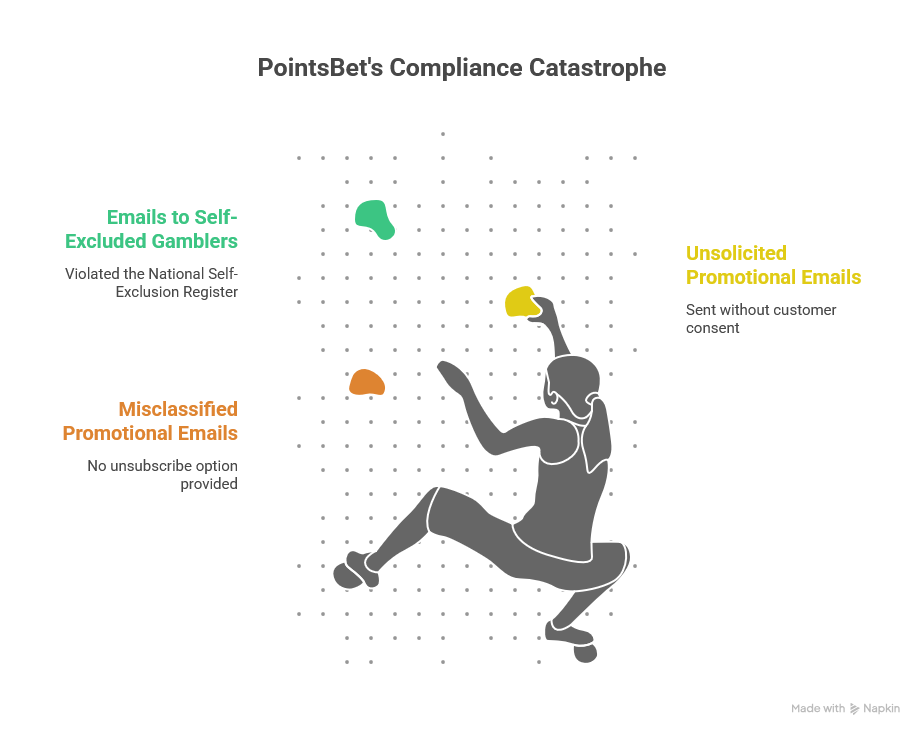
- 705 promotional emails misclassified as service messages, sent without an unsubscribe option
- Dispatching seven unsolicited promotional emails without customer consent
- Sending 508 emails to gamblers violating the National Self-Exclusion Register (NSER/BetStop).
The ACMA Regulatory Response
Having been found guilty, PointsBet was asked to pay a fine of AU$500,800 and was forced to take enforceable undertakings such as:
- Conducting an independent audit of compliance policies
- Proper training of staff to ensure Spam Act compliance in the future
- System and policy upgrade to prevent the recurrence of the infringement
ACMA has reportedly collected over AU$14 million in spam-related penalties between 2023 and 2025, suggesting increased scrutiny and stricter enforcement. Check the table below to see the cost companies have paid for their email mistakes in recent years.
|
Company
|
Fine
|
|
PointsBet Australia Pty Ltd
|
AU$500,800
|
|
Commonwealth Bank of Australia
|
AU$7,502,610
|
|
Pizza Pan Group Pty Ltd (Pizza Hut Australia)
|
AU$2,502,500
|
|
Luxottica Retail Australia Pty Ltd
|
AU$1,512,500
|
|
Ticketek Pty Ltd
|
AU$515,040
|
|
Kmart
|
AU$1,303,500
|
|
Uber Australia Pty Ltd
|
AU$412,500
|
|
DoorDash Technologies Australia Pty Ltd
|
AU$2,011,320
|
|
Tyre and Auto Pty Ltd (mycar Tyre & Auto)
|
AU$1,047,840
|
|
Commonwealth Bank of Australia
|
AU$3,552,000
|
|
Noah Rose (BetDeluxe)
|
AU$50,172
|
Source: https://www.acma.gov.au/
Were These Costly Mistakes Deliberate?
Not necessarily. In the case of PointsBet and other companies, the compliance failure took place due to process gaps that could have been easily prevented with technologies like email validation. Here are some of the oversights that got the company in trouble:
Misclassification of Emails: Some of the promotional emails could have been easily marked as non-commercial service messages, and their compliance scanner may not have been configured to flag missing unsubscribe links.
Consent Tracking Failures: It is obvious that PointsBet lacked a functional opt-in/opt-out database.
Weak Self-Exclusion Integration: It seems like their suppression lists were not up-to-date or integrated with their email platform.
Template & Testing Oversights: PointsBet’s automated email templates, when used without testing, lacked unsubscribe tokens.
Missing Sender Metadata: Their marketing campaigns lacked basic sender identification, a direct Spam Act violation.
Key Takeaways For Marketers
Despite operating in vastly different industries, PointsBet, Commonwealth Bank of Australia, and Kmart were all hit with hefty fines for their lack of email compliance. Here are the key takeaways for marketers to avoid fines from ACMA and other watchdogs, and follow Spam Act 2003 best practices:
- Add a functional unsubscribe link and the right sender info to your marketing messages
- Gambling firms must cross-check the NSER (The National Self-Exclusion Register) daily
- Sending commercial and promotional messages to self-excluded users is a serious offence
In the EU, promotional emails require explicit, documented consent, and marketers and companies must honor the right to erasure. Companies in the USA should have functional unsubscribe links, truthful subject lines, and physical business addresses in marketing messages to avoid penalties.
Can Email Validation Prevent These Disasters?
A robust email validation system can be your ally when it comes to compliance. In fact, many organizations now rely on email validation for regulatory compliance to avoid costly errors and legal consequences. But how exactly does email validation help marketers stay within the boundaries of the law?
Well, email validation is not just about checking if an address is formatted correctly or exists—it’s a multi-layered process that ensures your email marketing campaigns are clean, compliant, and secure. Here’s how it supports compliance:
- Effective syntax and domain validation to ensure that an email address is not only formatted properly, but also belongs to a legitimate domain
- Efficient consent and suppression list management that lets you know that recipients have opted in and are not on a do-not-contact list.
- A competent unsubscribe monitoring system that can automatically flag email IDs after customers unsubscribe
- Content scanning for compliance, such as missing headers, disclaimers, etc.
So, how exactly can email validation benefit companies and marketers?
- Prevent Violations: Email validation and verification tools can help prevent CAN-SPAM, GDPR, and other such legal violations by ensuring your promotional emails have functional unsubscribe links and the right metadata.
- Protect Brand Reputation: Email validation technology can make sure that your emails are not sent to self-excluded customers
- Improved deliverability: Clean email lists can ensure reduced bounce rate and better deliverability.
- Better ROI: Email validation can ping emails in real-time and reduce costly mistakes, improving your ROI
In addition to adopting a good email validation technology, companies and marketers should train their staff, conduct regular audits, and compliance reviews to eliminate future risks.
Compliance Is No Longer An Option
PointsBet’s tale should be a wake-up call for marketers and companies, especially those navigating email compliance in Australia
. Non-compliance, whether knowingly or unknowingly, can cost you financially and damage your reputation.
In today’s tightly regulated environment, compliance is non-negotiable. A reliable email validation system not only ensures cleaner, more accurate email lists but also helps maintain legal compliance. Ultimately, it protects your most vulnerable customers while preserving trust in your brand.
If your email validation and authentication system can’t guarantee that your promotional messages hit only the right inbox, at the right time, with the right permissions, you are just one click away from becoming the next PointsBet.
Compliance starts with clean data—and clean data starts with email validation
.