A missing mobile number almost stopped being a checkout inconvenience and started being the reason a label wouldn't print at all.
Australia Post had planned to require an accurate recipient email address or Australian mobile number on eligible domestic parcels sent through its business services. The requirement was subsequently delayed and is now expected sometime in 2027, with no confirmed date yet.
For retailers that had been preparing their checkout processes for the original deadline, the delay is welcome breathing room. But it is worth being honest about what that extra time really buys: an opportunity to fix the process properly, not a reason to put it on hold.
What the Rule Is Really Asking For
Read the requirement closely and one word does a lot of work: accurate.
Not present. Not formatted correctly. Accurate.
That distinction matters more than it first appears because Australia Post already relies on accurate contact information across parts of its delivery experience. Contact details can help match parcels to recipients and support services such as tracking notifications and parcel redirection.
In other words, the point of the requirement isn't simply to collect a string of characters that looks like an email address or phone number. It is to collect contact information that Australia Post can actually use to reach the recipient.
A syntactically valid email that cannot receive messages, or a mobile number entered with one digit wrong, may satisfy a basic data-entry check while failing the purpose behind the requirement.
That is where the difference between validation and verification becomes important.
Where Format Checks Fall Short
Most checkout validation starts with format checking. It confirms that an email has a username, an @ symbol and a recognisable domain. It checks that a phone number follows the expected structure for an Australian mobile number.
Both are useful first filters. They catch obvious mistakes while a customer is still completing an order.
But neither confirms that the contact detail actually works.
A format check cannot tell you whether an email mailbox is active, whether a domain can receive mail, or whether a mobile number is currently active. A customer can enter a perfectly well-formed but fictional email address, or transpose two digits in an otherwise valid-looking mobile number, and a basic format check can still accept it.
The difference may remain invisible until something goes wrong.
A customer may miss an important delivery notification. A parcel may not be matched to the expected recipient information. A customer may have difficulty receiving an update when a delivery changes.
The underlying problem is not that the data was missing. It is that nobody confirmed whether the data was usable.
Building Toward 2027 Properly
The extra runway is a genuine opportunity to close that gap before it becomes a compliance and operational problem.
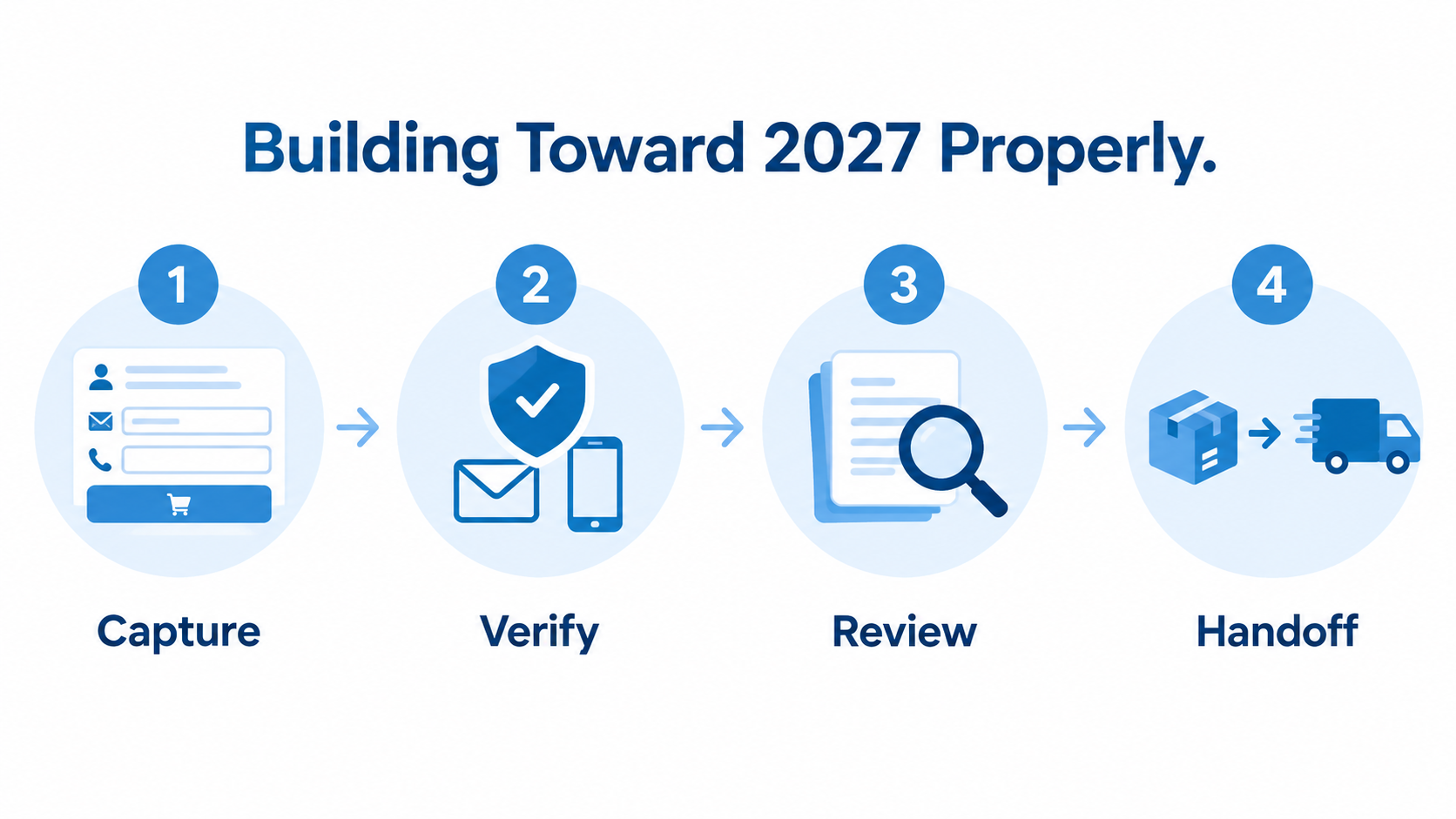
There are several steps retailers can take now rather than waiting for Australia Post to confirm a new implementation date:
- Treat email and phone details as important checkout data. If they are not already required for relevant delivery workflows, review whether they should be captured consistently rather than treated as optional information.
- Go beyond format validation. Use verification that can help determine whether an email address is deliverable and whether a mobile number is valid and active, rather than relying only on whether the data is correctly structured.
- Review orders that bypass the standard checkout flow. B2B accounts, wholesale orders, marketplace integrations, CSV imports and manually entered orders can introduce stale, incomplete or incorrectly entered contact information because the details may come from systems or processes outside the normal checkout experience.
- Check the handoff to logistics providers. Make sure the contact details passed to Australia Post at the point of manifesting are the same reliable details captured during the customer journey, rather than a placeholder, default value or outdated record.
These improvements do not need to wait for a confirmed 2027 deadline.
Businesses that treat 2027 as a problem to solve later could find themselves making changes under pressure, with real order volumes and customer expectations on the line. Businesses that use the additional time to improve their data quality processes can make verification part of the normal customer journey long before any new requirement takes effect.
Accuracy Is a Verification Problem, Not a Formatting One
Australia Post's delay gives retailers more time to prepare, but the underlying lesson remains the same.
The goal isn't simply to collect an email address or mobile number. It is to make sure the contact information associated with an order is accurate enough to support the delivery experience when it matters.
That is a fundamentally different standard from checking whether a value looks right.
Format validation and verification solve two different problems. One confirms that a string follows the expected structure. The other goes further to assess whether the contact information is valid and usable.
That distinction matters beyond Australia Post.
Every retailer depends on accurate contact data for order notifications, customer service, account management, marketing and delivery communications. When contact information is wrong, the consequences can extend well beyond a single failed message. It can create unnecessary support work, disrupt customer experiences and introduce inaccurate data into systems further downstream.
The businesses that use the 2027 runway to build better verification into their checkout and order workflows will be in a stronger position when the requirement eventually takes effect.
More importantly, they will have built a better foundation for every customer interaction that depends on accurate contact data.
Melissa's email and phone verification solutions help businesses go beyond basic format checks by assessing whether email addresses are deliverable and whether mobile numbers are valid and active. [book a demo] to discuss how verification can fit into your checkout and order workflows.